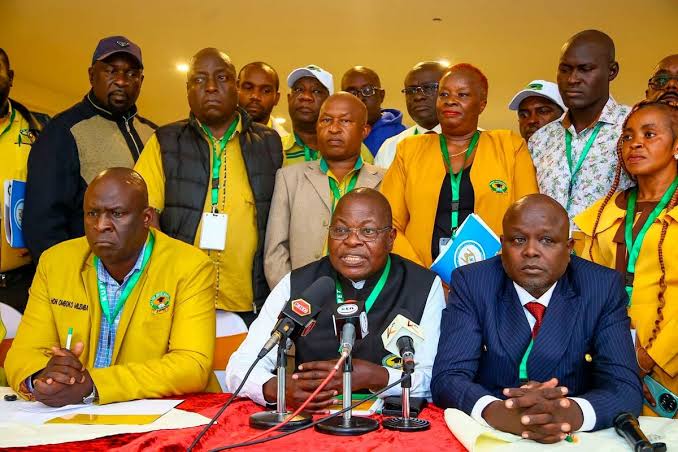
More than 46,000 junior school teachers are protesting Sh41 million monthly deductions sent to KUPPET, accusing the union of prioritising money over meaningful advocacy. Here’s the full breakdown of the controversy.
A heated confrontation is unfolding between junior school teachers and the Kenya Union of Post-Primary Education Teachers (KUPPET), with growing demands for transparency over the Sh41 million collected monthly from their salaries as Chipuko Digital Reports. The dispute, driven by concerns of misrepresentation and alleged financial exploitation, has ignited one of the most significant union crises in Kenya’s education sector in recent years.
At the heart of the controversy lies the mandatory 2 percent deduction taken from the salaries of more than 46,000 junior school teachers—each contributing approximately Sh890. While these deductions feed KUPPET a massive monthly revenue stream, teachers argue the union has offered little in return. Many feel that despite being among the top contributors, their concerns remain consistently overlooked.
The Kenya Junior School Teachers Association (KEJUSTA) has emerged as the leading voice demanding accountability. KEJUSTA leaders claim that KUPPET’s engagement with junior school issues has been superficial, sporadic, and largely reactionary. They insist that while the union benefits financially from their membership, it has failed to match this with proportional advocacy or representation.
According to KEJUSTA Chairperson James Odhiambo, junior school teachers have endured repeated disappointment, particularly in the union’s handling of the push for professional autonomy. Teachers want junior school to be recognised as a distinct department with clear administrative structures and career progression pathways. However, Odhiambo says KUPPET has shown little enthusiasm in pushing this agenda forward.
The financial grievances began when teachers noticed that despite their heavy contributions, KUPPET was not actively supporting their legal efforts. KEJUSTA had reached out to the union seeking assistance to fund a constitutional case aimed at securing administrative independence for junior school. Their request was allegedly declined without explanation. This rejection marked a turning point, intensifying suspicions among teachers that KUPPET was more invested in protecting its revenue base than advancing their welfare.
In addition to failing to support the legal challenge, KEJUSTA members accuse KUPPET of dragging its feet on a petition meant for parliamentary consideration. When approached to forward the petition, KUPPET is said to have insisted on holding consultations with the Teachers Service Commission (TSC) first—a decision KEJUSTA interprets as deliberate stalling.
Mr. Odhiambo argues that this pattern reveals a union that has veered away from its mandate, choosing convenience over confrontation even when members are suffering. To him and many junior school teachers, the union has become a passive intermediary rather than an assertive defender of rights.
Yet, KUPPET officials maintain that the accusations are exaggerated. A senior official, requesting anonymity, insists that the union is committed to structured dialogue with the government and the TSC to resolve junior school challenges. He argues that rushing to court or resorting to industrial action without sufficient engagement is irresponsible and counterproductive.
He also points out that KUPPET has set aside positions in its upcoming internal elections specifically for junior school representatives. This, he says, proves the union has been listening and adjusting to the evolving needs of its membership.
Despite these assurances, many junior school teachers remain unconvinced. They argue that representation offered during election season feels strategic rather than sincere—designed to retain the lucrative membership rather than address longstanding structural issues.
Financial transparency and accountability have now become rallying cries. KEJUSTA leaders question why KUPPET has not provided clear reports on how the Sh41 million monthly input from junior school teachers is utilised. They say the union has not demonstrated proportional investment in solving issues affecting junior school, such as heavy workloads, unclear promotion systems and lack of administrative identity.
The standoff comes at a time when KUPPET National Chairman Omboko Milemba recently confirmed that the union plans to meet TSC to discuss major issues, including the absorption of 20,000 interns into permanent employment and the promotion framework for junior school teachers. While significant, critics say these engagements began only after pressure from KEJUSTA intensified.
The rising discontent demonstrates the emerging power shift among teachers. Junior school educators, who once relied on traditional unions for protection, are now willing to break away and build new structures that align with their needs and vision. Should the mass withdrawal proceed, KUPPET risks losing not only millions in annual revenue but also relevance among a rapidly evolving teaching workforce.
For now, the debate continues, but the message is loud and clear: junior school teachers want visibility, respect and a union that prioritises them—not their contributions.