KUPPET’s Response and the Growing Disconnect With Junior School Teachers
KUPPET has finally responded to the allegations raised by junior school teachers, insisting it has not abandoned them. This article unpacks the union’s defence, the perceived disconnect, and why tensions continue to rise.
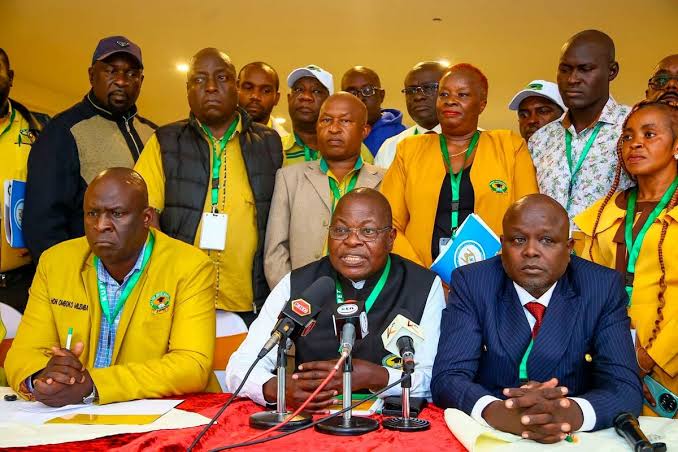
As tensions continue to escalate between junior school teachers and the Kenya Union of Post-Primary Education Teachers (KUPPET), the union has come forward with a strong defence, insisting it has not neglected the educators who now threaten to withdraw en masse as Chipuko Digital Reports. The confrontation has sparked a national debate, revealing deeper fractures in teacher representation and the shifting realities within Kenya’s education landscape.
A senior KUPPET official, who opted to speak anonymously, maintains that the union has been misjudged. According to him, much of the criticism stems from misunderstanding rather than outright neglect. He argues that the union has held numerous consultations with the Teachers Service Commission (TSC), the Ministry of Education and other key stakeholders, all aimed at addressing the challenges facing junior school teachers.
The official insists that while junior school teachers may feel sidelined, KUPPET has been engaging consistently behind the scenes. He explains that litigation and strikes are not the first tools a union employs they are last-resort measures when negotiations collapse. From his perspective, junior school teachers are demanding immediate, aggressive action, yet the union sees more value in structured dialogue.
But this explanation has done little to ease frustrations. Junior school teachers argue that KUPPET has failed to communicate transparently, leading to a growing sense of invisibility within the union. Many say that if critical matters like autonomy, promotions and the confirmation of interns are being discussed, the union has not shared progress reports or updates with the teachers paying monthly dues.
The KUPPET official goes on to highlight that the union has created space within its internal election structure for junior school representation. In the upcoming union elections, junior school educators have been allocated a slot specifically dedicated to advancing their interests from within. This, he insists, disproves claims that junior school teachers are undervalued or ignored.
However, the Kenya Junior School Teachers Association (KEJUSTA) views this move differently. According to KEJUSTA Chairperson James Odhiambo, these election slots are a superficial attempt to placate teachers who feel deeply unrepresented. He argues that representation in union politics holds little meaning if the union’s strategic direction does not align with the needs of junior school educators.
Odhiambo believes KUPPET’s approach is reactive, not proactive. Junior school teachers want a union that will take bold positions, including pushing for professional autonomy, supporting legal petitions, and addressing career stagnation—issues they say KUPPET has either been slow or unwilling to champion.
One key point of contention is autonomy. KEJUSTA accuses KUPPET of shifting its stance on the fight to have junior school recognised as an independent division separate from secondary schools. Teachers say they initially received assurances of support, only for the union to later backtrack. When KEJUSTA sought assistance to fund a High Court legal challenge, KUPPET allegedly declined.
To junior school teachers, this refusal confirmed fears that the union prioritises stability over assertive advocacy—especially on issues that require challenging powerful institutions. Many feel that the union is unwilling to push too hard for reforms that would unsettle existing structures.
But KUPPET defends itself by arguing that education policy is delicate and requires thoughtful engagement. The anonymous official emphasizes that the union has several scheduled meetings, including one in Naivasha with TSC, to address critical matters such as the confirmation of 20,000 junior school interns into permanent employment and the creation of a fair promotion pathway.
National Chairman Omboko Milemba has reiterated that KUPPET is committed to resolving these issues through negotiation. He insists that TSC must stop employing teachers as interns, calling it unconstitutional and exploitative. According to Milemba, KUPPET is pushing for permanent and pensionable employment for all junior school teachers—as mandated by law.
Despite these assurances, the disconnect persists. Junior school teachers feel unheard, undervalued and inadequately represented. They want visibility, urgency and meaningful action—not long-term promises. Many believe that if the union truly understood their struggle, the tone and intensity of its advocacy would be markedly different.
The unfolding dispute raises important questions about the future of teacher representation in Kenya. Can KUPPET rebuild trust with a constituency that now feels deeply alienated? Or will junior school teachers break away and reshape the union landscape entirely?
For now, one thing is clear: junior school teachers are no longer willing to settle for passive representation. Whether KUPPET adapts or loses a massive portion of its membership remains to be seen.