In a scathing revelation that has sent shockwaves through the education sector, the Ministry of Education has linked the upcoming 2026 national examination registration to a wider crackdown on financial fraud. Education Cabinet Secretary Julius Ogamba revealed that the government lost a staggering Sh912 million in just one term due to the manipulation of student data.
The discovery of over 87,000 “ghost learners” in the National Education Management Information System (NEMIS) has prompted a more rigorous approach to the 2026 registration exercise.
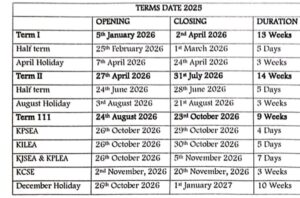
The fraud, which involved the inflation of enrollment numbers by corrupt school officials, has led to a tightening of the registration protocols for KPSEA, KJSEA, and KCSE. By setting a strict deadline of March 2026, the ministry hopes to cross-verify every entry against physical records to ensure that taxpayers’ money is only spent on genuine students.
“We are purging the system of parasites who have been siphoning funds meant for our children’s future,” Ogamba stated during the launch of the registration exercise at KNEC headquarters.
The Kenya National Examinations Council CEO, Dr. David Njeng’ere, added that the data collected during this registration window is the backbone of all educational planning. When data is faked or inflated, it disrupts the distribution of capitation funds and the deployment of examiners. To combat this, KNEC is moving toward an electronic certificate system, which will be piloted later this month.
This digital shift is expected to enhance security and make it nearly impossible for fraudulent records to persist in the national database.