The Hidden Burden of BoM Teachers: How Parents Are Financing Public Schools in Kenya
Thousands of Kenyan public schools depend on Board of Management teachers paid by parents. Here’s why the BoM system is unsustainable and risky.
Behind the façade of free public education in Kenya lies a growing and largely unspoken reality: parents are quietly financing a significant portion of the teaching workforce through Board of Management (BoM) teachers.
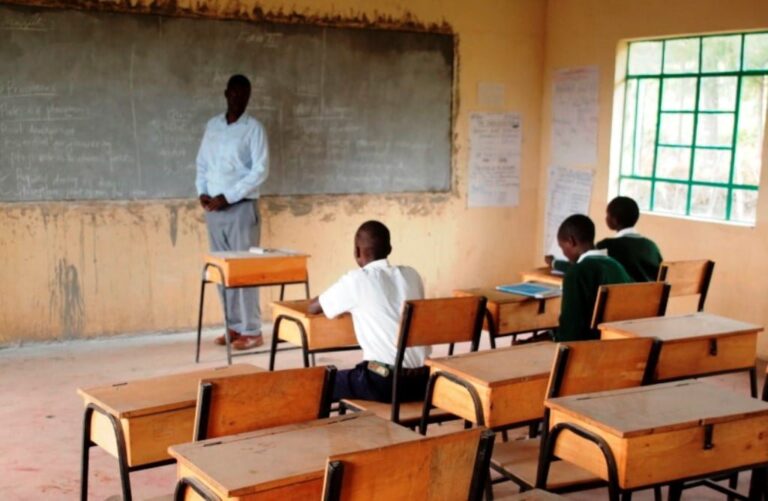
Across the country, public schools struggling with chronic teacher shortages have turned to BoM teachers as a survival mechanism. These teachers are hired directly by school boards and paid using funds contributed by parents, often through levies, activity fees, or informal collections.
In some schools, the number of BoM teachers rivals — or even exceeds — those employed by the Teachers Service Commission (TSC). According to TSC officials, there are cases where up to 20 BoM teachers are engaged in a single institution, underscoring the depth of the staffing crisis.
The rise of BoM teachers is directly linked to limited government absorption capacity. While Kenya has more than 900,000 registered teachers, budgetary constraints mean that fewer than half are employed by TSC. This gap leaves schools with little choice but to seek alternative staffing arrangements.
For parents, the financial burden is significant. Many households already struggle with the cost of uniforms, meals, transport, and learning materials. Adding teacher salaries to this list places enormous strain on families, particularly in low-income and rural areas.
The result is a two-tier education system. Schools in affluent communities can afford to hire more BoM teachers, maintain smaller class sizes, and offer a wider range of subjects. In contrast, schools in poorer regions operate with skeletal staff, overcrowded classrooms, and limited subject choices.
BoM teachers themselves face precarious working conditions. Unlike their TSC-employed counterparts, they often receive low and irregular pay, lack job security, and have no access to pensions, medical cover, or career progression pathways. Many work for years without formal contracts, relying solely on goodwill from school boards and parents.
This instability affects learning continuity. High turnover among BoM teachers disrupts syllabus coverage and weakens teacher-student relationships, particularly in examination classes. Despite their dedication, many BoM teachers eventually leave in search of more stable employment.
The dependence on BoM teachers also raises policy concerns. Kenya’s Constitution guarantees the right to free and basic education, yet the widespread reliance on parent-funded teachers contradicts this principle. It effectively shifts responsibility from the state to households.
Education experts warn that the BoM model, while temporarily effective, is unsustainable in the long term. Without increased funding to TSC and faster teacher recruitment, the burden on parents will continue to grow, deepening inequality and undermining education quality.
As the Competency-Based Education (CBE) system advances into Senior School — where specialized teachers are essential — the limitations of the BoM approach will become even more pronounced. Practical subjects require consistency, expertise, and long-term investment, none of which can be reliably supported through ad hoc parent funding.
Ultimately, the BoM teacher phenomenon is not a solution but a symptom — a clear signal that Kenya’s public education system urgently needs structural and financial reinforcement.