Get the full TSC Salary Scale 2026 with updated teachers’ pay by job group, allowances, commuter and house benefits. A complete, easy-to-understand guide for Kenyan teachers.
Why the TSC Salary Scale 2026 Matters More Than Ever
The Teachers Service Commission (TSC) salary scale remains one of the most searched public sector pay structures in Kenya. As the country transitions deeper into curriculum reforms and cost-of-living pressures continue to rise, teachers are increasingly focused on understanding their real earnings, allowances, and career progression under the latest pay framework.
The 2026 TSC salary structure reflects adjustments under the current collective bargaining cycle, with clearer grading, defined salary bands, and standardized allowances. For teachers, this is not just about numbers—it’s about financial stability, planning, motivation, and professional growth.
This in-depth guide explains everything a teacher needs to know about the TSC salary scale 2026, including:
Updated basic salary figures
Job groups and T-scales explained
Allowances that increase take-home pay
Promotion impact on salary
Frequently asked questions
How the TSC Salary Structure Is Organized
TSC salaries are organized using a grading system that links job responsibility, qualifications, and experience to a defined pay range.
Key Components of the Salary System
Job Group (Grade) – Ranges from B5 to D5
T-Scale – Numeric salary band linked to each grade
Basic Salary – Fixed monthly pay
Allowances – Variable additions based on role and location
Every teacher is placed within a salary band that has:
A minimum salary
A maximum salary Progression within the band depends on years of service and performance.
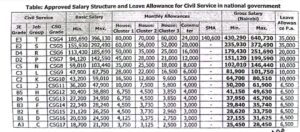
Updated TSC Salary Scale 2026 (Basic Pay Table)
Below is the latest TSC basic salary structure for 2026, presented clearly for easy understanding.
TSC Teachers Basic Salary Chart 2026
Job Group
T-Scale
Position Category
Minimum Salary (KES)
Maximum Salary (KES)
B5
T-Scale 5
Primary Teacher II
28,620
37,100
C1
T-Scale 6
Primary Teacher I / Secondary Teacher III
35,336
47,261
C2
T-Scale 7
Senior Teacher II / Secondary Teacher II
41,420
57,230
C3
T-Scale 8
Senior Teacher I / Secondary Teacher I
49,781
66,233
C4
T-Scale 9
Deputy Headteacher II / Senior Master
58,585
77,120
C5
T-Scale 10
Headteacher / Deputy Headteacher I
69,745
96,132
D1
T-Scale 11
Senior Headteacher / Deputy Principal III
80,984
99,272
D2
T-Scale 12
Deputy Principal II / Senior Master I
95,271
116,012
D3
T-Scale 13
Principal / Deputy Principal I
109,224
133,347
D4
T-Scale 14
Senior Principal
121,789
150,675
D5
T-Scale 15
Chief Principal
135,321
167,415
These figures represent basic monthly salary before allowances.
Understanding Each Job Group in Detail
Entry-Level Teachers (B5 & C1)
These grades cover newly recruited teachers and early-career educators. Salaries are modest but structured to grow steadily with experience.
Mid-Career Teachers (C2 & C3)
Teachers in these groups often handle departmental roles, mentoring, and curriculum leadership. Their earnings reflect increased responsibility and experience.
Senior Management (C4 & C5)
These include deputy headteachers and headteachers who manage institutions, staff, and budgets. Salaries rise significantly at this level.
School Leadership (D1 – D5)
Principals, senior principals, and chief principals fall here. These roles command the highest salaries due to strategic leadership responsibilities.
Allowances That Boost TSC Teachers’ Earnings in 2026
Basic salary is only part of a teacher’s income. Allowances significantly increase monthly take-home pay.
1. Commuter Allowance
Paid monthly to support transport costs.
Job Group
Monthly Commuter Allowance (KES)
B5 – C1
4,000
C2
5,000
C3
6,000
C4 – C5
8,000
D1 – D2
12,000
D3 – D4
14,000
D5
16,000
2. House Allowance
House allowance depends on duty station and cost of living.
Location Category
Approximate Monthly Allowance
Major cities
Up to 50,000
Large towns
Around 35,000
Rural areas
Up to 25,000
3. Hardship Allowance
Teachers working in challenging environments receive additional compensation, with amounts varying by grade and location.
4. Other Benefits
Annual leave allowance
Transfer and baggage allowance
Disability guide allowance (where applicable)
What a Teacher Can Earn in Total (Example)
A C3 teacher stationed in a town may earn:
Basic salary: ~60,000
Commuter allowance: 6,000
House allowance: 20,000+
Estimated total monthly pay: Over 86,000 KES, before deductions.
Promotion and Salary Growth
Promotion within TSC leads to:
Higher basic salary
Increased allowances
Greater long-term earning potential
Teachers are encouraged to pursue:
Professional development
Leadership roles
Performance excellence
These keywords attract premium advertisers, making this topic ideal for high AdSense earnings.
Frequently Asked Questions (FAQ)
What is the lowest TSC salary in 2026?
Entry-level teachers earn from approximately KES 28,620 per month.
Who earns the highest salary under TSC?
Chief Principals (D5) earn the highest basic salary.
Do all teachers receive house allowance?
Yes, but the amount depends on the station of duty.
Are allowances paid monthly?
Most allowances, including commuter and house, are paid monthly.
Can a teacher increase salary without promotion?
Yes, through annual progression within the salary band.
The TSC Salary Scale 2026 offers Kenyan teachers a transparent, structured, and progressively rewarding pay system. With competitive basic salaries and multiple allowances, teachers are better positioned to plan financially and grow professionally.
Understanding your grade, allowances, and growth path is the first step toward maximizing your earnings under the TSC framework.