Senior School CBE Exposes Kenya’s Growing STEM Teacher Shortage
As Senior School rolls out under CBE, Kenya faces an alarming shortage of STEM teachers. Here’s what the data reveals.
The rollout of Kenya’s Senior School under the Competency-Based Education framework has exposed a deep structural weakness in the country’s education system — a critical shortage of STEM teachers.
Senior School, which forms the final stage of basic education, is designed around three learning pathways: STEM, Social Sciences, and Arts & Sports. Among these, STEM dominates both in learner numbers and resource demands. TSC estimates that nearly two out of every three learners will enroll in the STEM pathway, driven by national priorities around industrialization, digital skills, and innovation.
However, the supply of qualified teachers has failed to keep pace.
Official data from TSC indicates that the STEM pathway alone requires over 35,000 specialised teachers, yet current staffing levels fall far short. This gap threatens not only learning quality but also the credibility of the entire CBE reform.
The challenge stems from historical training patterns. For decades, universities produced large numbers of teachers in humanities subjects, while technical education remained underdeveloped. As a result, Kenya now faces a paradox — hundreds of thousands of trained teachers are unemployed, even as classrooms lack instructors in critical technical subjects.
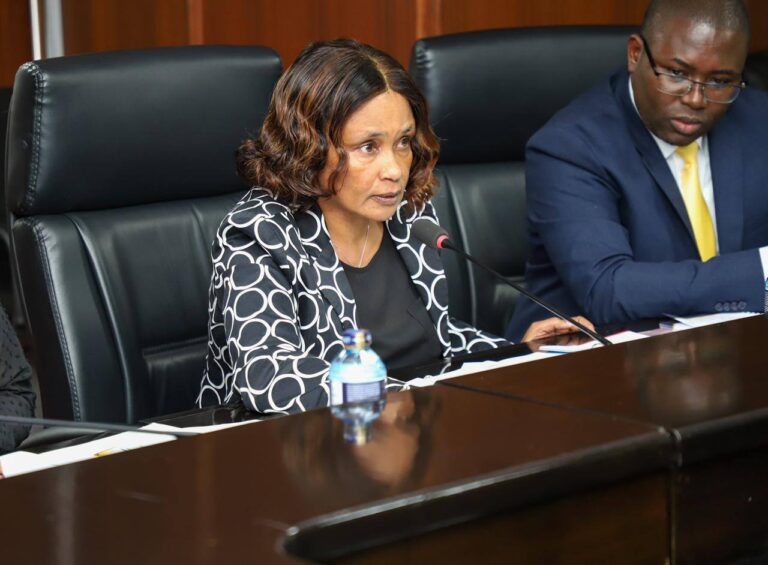
Dr Reuben Nthamburi of TSC has highlighted this imbalance using stark recruitment statistics. When humanities positions are advertised, applications can exceed 5,000 per vacancy. In contrast, technical teaching posts often attract minimal interest or fail to be filled entirely.
This shortage has forced schools to rely heavily on Board of Management (BoM) teachers, whose salaries are paid directly by parents. In some institutions, parents fund as many as 20 teachers — an unsustainable model that widens inequality between schools.
The STEM teacher deficit also places enormous strain on existing staff, leading to high workloads, burnout, and compromised learning outcomes. Practical subjects require smaller class sizes, specialized equipment, and instructors with industry-relevant expertise — all of which are difficult to deliver without adequate staffing.
To address the crisis, TSC is now recalibrating recruitment to favor B.Ed Technology graduates, while urging universities to reorient training programs. Without this correction, the Senior School model risks collapsing under its own weight.
The STEM teacher shortage is no longer a future threat — it is a present reality. How Kenya responds will determine whether CBE succeeds or becomes another well-intentioned reform undermined by poor execution.