Why Kenya’s Senior Schools Can Guarantee Full Grade 9 Transition
As Kenya implements the Competency-Based Education (CBE) system, concerns have emerged about whether senior schools can accommodate the country’s growing learner population. Education authorities, however, insist that the system is not only ready—but structured—to guarantee 100 per cent transition for all Grade 9 learners.
Through strategic restructuring, expanded capacity, and efficient use of infrastructure, the Ministry of Education says senior schools nationwide are fully prepared to absorb every learner progressing from junior school.
Understanding the Capacity Advantage
One of the most critical changes enabling full transition is the redesign of the senior school structure. Unlike the previous secondary school model that operated with four classes, senior schools under CBE will run only three classes.
This adjustment instantly frees up learning spaces that were previously occupied by a graduating cohort, creating additional capacity without the need for immediate large-scale construction.
Education planners say this built-in buffer plays a central role in preventing overcrowding.
National Senior School Capacity at a Glance
Kenya currently has over 9,500 senior schools with a combined capacity exceeding 2.2 million learners. This figure comfortably surpasses the number of learners expected to enter senior school in the current cycle.
At the same time, nearly one million candidates are exiting secondary school after completing their final national assessments, further easing pressure on facilities.
The ministry argues that this demographic shift makes the transition not only manageable but efficient.
Why Overcrowding Will Be Avoided
Overcrowding has long plagued Kenya’s education system, particularly in high-demand institutions. The new placement and capacity strategy addresses this issue from multiple angles:
Strategic distribution of learners across counties using the CRA formula
Pathway-based placement that spreads demand across different school types
Utilisation of extra classrooms freed by the three-class model
Matching learner numbers to school infrastructure readiness
These measures ensure that no single school absorbs more learners than it can reasonably support.
Infrastructure as a Placement Factor
Unlike previous systems, the new placement model actively considers school size and infrastructure when allocating learners. Institutions with adequate facilities are prioritised for higher intake, while those with limited capacity receive fewer placements.
This data-driven approach helps maintain quality learning environments while preventing strain on teaching staff and resources.
Day Schools Play a Bigger Role
Day senior schools have been positioned as a critical pillar of the transition strategy. By strengthening day schools and aligning them with specific pathways, the ministry aims to keep learners closer to home while reducing unnecessary pressure on boarding facilities.
This approach also lowers the cost burden on families and improves attendance and retention.
Efficient Monitoring Through Digital Systems
All admissions will be managed through the National Education Management Information System (NEMIS). Schools are required to confirm physical reporting before enrolling learners digitally, ensuring accurate data and eliminating ghost admissions.
Daily monitoring by the ministry allows for quick intervention if imbalances or bottlenecks arise during the reporting period.
Managing Parental Concerns
For many parents, fears of overcrowding stem from past experiences. Education officials acknowledge these concerns but insist the new system has been designed precisely to avoid previous mistakes.
Parents are encouraged to trust the placement process while engaging with schools during the reporting period to address individual needs.
Transition Timelines and Certainty
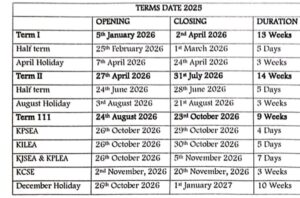
The ministry has provided clear timelines to ease anxiety. All learners are expected to be in senior school classrooms by mid-January, with placement results released well in advance to allow for preparation and adjustments.
A structured revision window ensures flexibility without disrupting the national transition schedule.
A Sustainable Model for Future Cohorts
Education experts note that the senior school capacity model is not a temporary solution. It has been designed to remain sustainable as future cohorts progress through the CBE system.
By aligning learner numbers with infrastructure planning and pathway distribution, the government aims to create a stable, long-term framework for secondary education.
Looking Beyond the Transition
Beyond accommodating learners, the reforms are intended to improve learning quality, reduce congestion-related challenges, and support diverse talents.
With careful monitoring and continuous improvement, senior schools are expected to become more responsive, efficient, and learner-centred.