As the Teachers Service Commission (Amendment) Bill 2024 cleared a major hurdle in the National Assembly in February 2026, Article 18 has emerged as a beacon of hope for thousands of teachers stationed in Kenya’s most remote regions.
The Bill, sponsored by Mandera South MP Abdul Haro, seeks to move beyond the era of discretionary circulars by legally entrenching hardship allowances and other critical benefits into the Fourth Schedule of the TSC Act. This move is designed to bring predictability, fairness, and a much-needed morale boost to the “forgotten” educators of the ASAL (Arid and Semi-Arid Lands) regions.
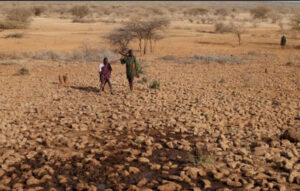
For years, the classification of “hardship areas” has been a source of friction, with some regions being de-gazetted without clear justification. Article 18 changes the game by mandating the TSC to pay hardship allowances at a determined rate to every teacher assigned to a school in a gazetted hardship zone.
By formalizing this in the Fourth Schedule, the allowance becomes a statutory right. This prevents the government from unilaterally slashing these “hard-won gains” and ensures that teachers in areas like Turkana, Mandera, and the newly proposed zones in Kilifi and Taita Taveta receive their dues consistently.
Ending the “Acting Without Pay” Crisis
A central pillar of this article is the protection of teachers in acting positions. Lawmakers revealed that over 3,300 school heads and 99,000 teachers nationwide are currently serving in acting capacities—some for years—without official recognition or the corresponding Special Duty Allowance. The new law imposes a strict limit:
Duration: Acting appointments must last at least 30 days but cannot exceed six months.
Remuneration: Any teacher in an acting role is legally entitled to a special duty allowance.
Confirmation: Once the six-month period lapses, the TSC must either confirm the teacher in the position or substantively fill it, ending the “limbo” that has demoralized school administrators for decades.
The “Affirmative Action” Scorecard
To address the chronic teacher shortage in marginalized areas, the Bill introduces an affirmative action framework. Teachers working in ASAL and other “hard-to-staff” areas will benefit from prioritized promotions. The TSC will now use specialized criteria to ensure that service in a hardship area is rewarded with faster career progression.
Additionally, the Bill introduces Transfer Allowances for teachers moved by the Commission from one sub-county to another, ensuring that relocation doesn’t become a financial burden on the educator.
Structured Remuneration Review
Article 18 also mandates a more transparent relationship between the TSC and the Salaries and Remuneration Commission (SRC). Any review of allowances—including house, commuter, and leave allowances—must be done through formal consultation.
This prevents “executive fiat” from changing teacher benefits overnight. By creating this structured framework, the National Assembly aims to “dignify the profession” and ensure that teachers are not just asking for favors, but are receiving the fair labor practices guaranteed to them under Article 41 of the Constitution.
Tags
TSC hardship allowance 2026, TSC Amendment Bill 2024 allowances, Special Duty Allowance teachers Kenya, Acting headteacher laws Kenya, ASAL teacher promotions, MP Abdul Haro TSC Bill.