As the 2026/2027 Budget Policy Statement was presented to Parliament in February 2026, Article 24 of the ongoing reforms has emerged as the cornerstone of Kenya’s “Virtual Classroom” future. Recognizing that the modern learner is increasingly digital-native, the Teachers Service Commission (TSC) has announced a massive technical upskilling program.
The Commission intends to train 23,000 teachers on ICT integration and remote learning methodologies, moving beyond traditional chalk-and-board instruction to a hybrid educational model.
The initiative is a response to the “digital gap” exposed during previous curriculum transitions. Article 24 focuses on equipping educators with the skills to use Learning Management Systems (LMS), digital content creation tools, and interactive smartboards.
This is not merely about “using a computer” but about ICT Integration—the ability to weave technology into the delivery of subjects like Mathematics, Sciences, and the Arts. The training will prioritize teachers in Junior and Senior Schools, where the Competency-Based Curriculum (CBC) demands more practical and research-oriented learning.
Live-Streaming Lessons: The World Bank Partnership
A key component of this article is the scale-up of “Live-Streaming of Lessons.” Supported by World Bank-funded programs like SEEQIP (Secondary Education Equity and Quality Improvement Programme), the TSC is piloting a model where a “master teacher” in a well-resourced school can beam a live lesson to multiple understaffed schools in remote regions.
This “Virtual Staffing” strategy aims to ensure that a student in a marginalized county receives the same quality of instruction in complex subjects as a student in a top-tier national school.
Institutionalizing Remote Learning
The 2024–2026 reforms seek to make remote learning a permanent feature of the Kenyan education system, rather than an emergency measure. The Bill proposes that:
Digital Literacy become a mandatory component of the Teacher Performance Appraisal and Development (TPAD) system.
Smart Hubs be established in selected Zonal Offices to provide teachers with high-speed internet and recording equipment for lesson preparation.
Online TPD: The mandatory Teacher Professional Development modules will be transitioned to a fully online format, saving teachers from the costs of physical travel to training centers.
The Cost of Progress
To fund this digital revolution, the TSC has requested specific allocations within its Sh422.9 billion budget proposal. This includes Sh184 million for donor-funded equity programs and additional internal funds for the retooling of 70,000 teachers annually across all CBC learning areas.
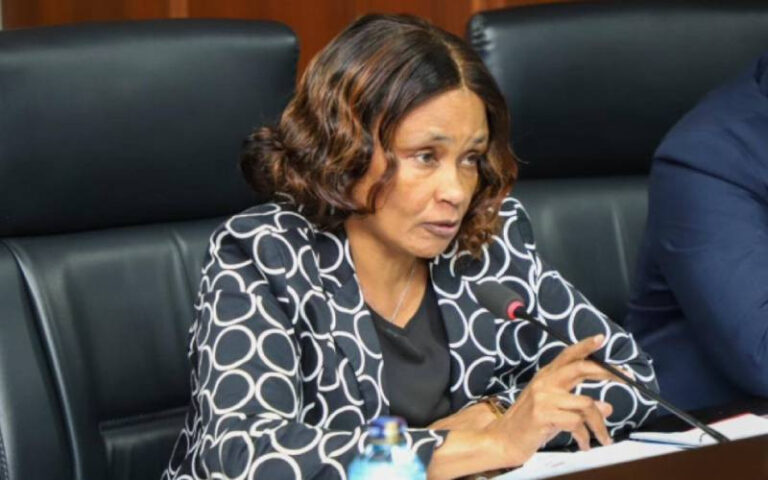
Acting CEO Evaleen Mitei emphasized that “the teacher of 2026 must be an orchestrator of digital resources,” signaling that tech-aversion is no longer an option for those seeking promotion or retention in the service.
Tags
TSC ICT training 2026, Remote learning for Kenyan teachers, TSC ICT integration budget, SEEQIP World Bank Kenya, Teacher digital literacy 2026, CBC ICT integration.